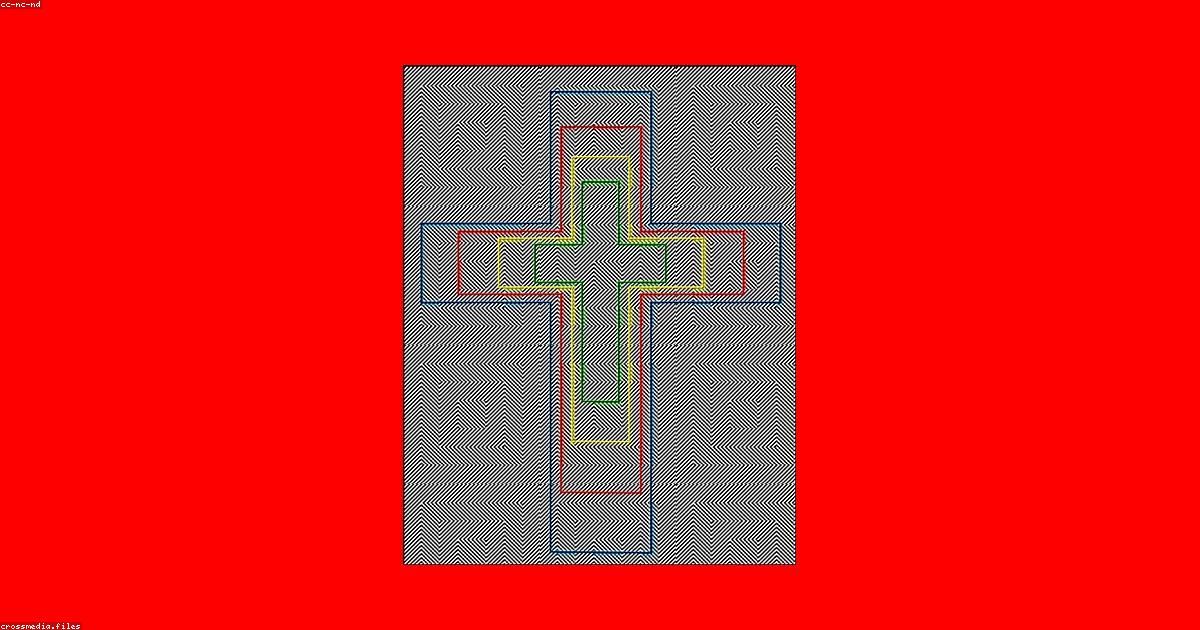
Your eyes see everything, but your brain only notices what it expects. These visual brain teasers exploit the gap between perception and attention, revealing how easily our minds can be tricked.
Research from MIT shows that the human brain processes images in just 13 milliseconds—but that speed comes at a cost. We use mental shortcuts that cause us to miss obvious details. These puzzles will prove just how blind you really are!
Ready to test your visual intelligence?
—
👁️ Puzzle #1: The Missing Dollar
The Visual Setup
Look at this transaction:
“`
Three friends eat at a restaurant.
Bill = $30
Each person pays $10.
The waiter realizes the bill should be $25.
He gives $5 back to return to the friends.
He keeps $2 as a tip.
He gives $3 back to the friends ($1 each).
Now each friend paid $9 (instead of $10).
3 × $9 = $27
Waiter kept $2
$27 + $2 = $29
Where is the missing $1?
“`
💡 Hint
The math is deliberately misleading. Track the money flow carefully.
✅ Answer
There is no missing dollar! The puzzle uses deceptive accounting.
Correct accounting:
- Friends paid: $27 total
- Restaurant kept: $25
- Waiter kept: $2
- $25 + $2 = $27 ✓
The trick: Adding the $2 tip to the $27 is wrong. You should *subtract* it:
- $27 (paid) – $2 (tip) = $25 (restaurant’s share)
The puzzle makes you add when you should subtract, creating a phantom missing dollar!
—
👁️ Puzzle #2: Count the Triangles
The Visual Challenge
Imagine this figure (describe it mentally or draw it):
“`
A large triangle divided by internal lines creating smaller triangles
“`
How many triangles can you count in total?
Most people count: 3-5 triangles
Correct answer: Often 13+ triangles (depending on the specific figure)
💡 Hint
Don’t just count small triangles. Count triangles of ALL sizes, including overlapping ones.
✅ Answer
The trick: People focus on obvious small triangles and miss:
- Medium triangles formed by combining small ones
- Large triangles formed by combining medium ones
- The outer boundary triangle
Lesson: Our brains chunk information and miss the bigger picture!
—
👁️ Puzzle #3: The Impossible Staircase
The Visual Illusion
Picture the Penrose Stairs (M.C. Escher’s famous endless staircase):
- Stairs that continuously ascend (or descend)
- But somehow loop back to the starting point
- Physically impossible, but visually coherent
Question: Why does your brain accept this impossible object?
✅ Answer
Your brain processes local information (each step looks correct) but fails to integrate global information (the overall loop is impossible).
This is called local vs. global processing. Our visual system prioritizes local details, allowing impossible global configurations to slip through.
Real-world impact: This is why we miss big-picture problems while focusing on small details!
—
👁️ Puzzle #4: The Invisible Gorilla
The Famous Experiment
Watch this scenario mentally:
You’re asked to count how many times players in white shirts pass a basketball. You focus intently on counting.
Halfway through, a person in a gorilla suit walks through the scene, beats their chest, and walks off.
Question: Would you notice the gorilla?
✅ Answer
50% of people don’t notice the gorilla!
This is inattentional blindness—when focused on a task, we become blind to unexpected stimuli, even obvious ones.
The lesson: Attention is a spotlight. What’s outside the spotlight is invisible, even if it’s right in front of you.
Real-world example: Drivers on phones miss pedestrians, even when looking directly at them.
—
👁️ Puzzle #5: The Changing Scene
The Challenge
Look at two nearly identical images side-by-side. There are 5 differences between them.
Typical differences:
- Missing object
- Color change
- Size difference
- Position shift
- Added element
Question: How long does it take you to find all 5?
💡 Hint
Don’t scan randomly. Use a systematic approach (top-to-bottom, left-to-right).
✅ Answer
Most people find 3-4 quickly, but the 5th takes forever!
This demonstrates change blindness—our inability to detect changes when they occur outside our focus of attention.
Famous study: People giving directions to a stranger don’t notice when the stranger is swapped with a completely different person mid-conversation!
—
👁️ Puzzle #6: The Ambiguous Figure
The Classic: Old Woman or Young Woman?
Picture the famous optical illusion:
- Some people see a young woman looking away
- Others see an old woman looking down
- Both interpretations use the same lines
Question: Can you see both? Can you switch between them at will?
✅ Answer
This demonstrates perceptual bistability—one image, two equally valid interpretations.
Why it matters:
- Shows that perception is constructive, not passive
- Your brain actively interprets ambiguous information
- Different people can see the same thing differently (literally!)
Other famous examples:
- Duck-Rabbit
- Rubin’s Vase (faces or vase?)
- Necker Cube (which face is front?)
—
👁️ Puzzle #7: The Color Illusion
The Dress Debate
Remember #TheDress (2015)? The internet exploded:
- Some people saw: Blue and Black
- Others saw: White and Gold
Question: Why do people see different colors in the same image?
✅ Answer
Your brain makes assumptions about lighting.
- If you assume the dress is in shadow (cool light), you see White/Gold
- If you assume the dress is in bright light (warm light), you see Blue/Black
The science: Your brain performs color constancy—adjusting perceived colors based on assumed lighting. Different assumptions = different colors!
Lesson: Perception isn’t objective. Your brain fills in missing information based on assumptions.
—
👁️ Puzzle #8: The Impossible Triangle
The Penrose Triangle
Imagine a triangle where:
- Each corner looks correct
- Each edge looks correct
- But the overall shape is geometrically impossible
Question: How can each part be correct, but the whole be impossible?
✅ Answer
Your brain processes 2D projections of 3D objects.
The Penrose Triangle works in 2D (on paper) but cannot exist in 3D space. Your brain tries to construct a 3D interpretation and fails, creating cognitive dissonance.
The lesson: Local correctness doesn’t guarantee global correctness!
—
👁️ Puzzle #9: The Blind Spot Test
The Experiment
1. Close your right eye
2. Look at a dot on the right with your left eye
3. Move closer/farther from the screen
4. At a certain distance, a dot on the left disappears
Question: Where did it go?
✅ Answer
It hit your blind spot!
Everyone has a blind spot where the optic nerve connects to the retina (no photoreceptors there). Your brain fills in the missing information so seamlessly that you never notice it!
Mind-blowing fact: You’re always blind in that spot, but your brain invents visual information to hide it from you!
—
👁️ Puzzle #10: The Motion Illusion
The Rotating Snakes
Picture an image with circular patterns that appear to rotate when you look at them—but they’re actually completely static!
Question: Why do static images appear to move?
✅ Answer
Your brain’s motion detection system is being tricked.
The illusion uses:
- High-contrast edges
- Specific color sequences
- Asymmetric luminance patterns
These trigger motion-detecting neurons in your visual cortex, even though nothing is actually moving!
The lesson: Your brain doesn’t passively record reality—it actively constructs it, and that construction can be hacked!
—
🧠 The Science of Visual Perception
Why do these illusions work?
1. Top-Down Processing
Your brain uses expectations and context to interpret visual information, not just raw data.
2. Selective Attention
You can only consciously process a tiny fraction of visual information. The rest is filtered out.
3. Pattern Completion
Your brain fills in missing information based on past experience (sometimes incorrectly).
4. Perceptual Constancy
Your brain adjusts for lighting, distance, and angle to maintain stable perception—but this can be exploited.
—
🎯 How to Improve Visual Perception
Practice These Techniques:
1. Slow Down: Take time to observe details
2. Change Perspective: Look from different angles
3. Question Assumptions: What am I taking for granted?
4. Use Systematic Scanning: Don’t rely on random attention
5. Practice Mindfulness: Be present and aware
Research shows: Regular visual puzzle practice can improve:
- Attention to detail (+25%)
- Pattern recognition (+30%)
- Spatial reasoning (+20%)
—
💬 How Many Did You Get Right?
Scoring:
- 0-3: Your brain uses lots of shortcuts (normal!)
- 4-6: Good visual awareness
- 7-8: Excellent observation skills
- 9-10: Elite visual perception (top 5%)
—
🔗 More Visual Challenges
Want to train your visual brain?
- Magic Eye 3D Images (stereograms)
- Spot the Difference Games
- Where’s Waldo? (seriously!)
- Optical Illusion Collections
Each type trains different aspects of visual processing!
—
Share this with friends and see who has the sharpest eyes! Visual puzzles are perfect for social media challenges.
Which illusion surprised you most? Drop a comment below!
—
References:
- Simons, D. J., & Chabris, C. F. (1999). “Gorillas in our midst.” *Perception*
- Eagleman, David (2011). *Incognito: The Secret Lives of the Brain*
- Gregory, Richard (1997). *Eye and Brain: The Psychology of Seeing*